What is Manual Lymphatic Drainage (MLD)?
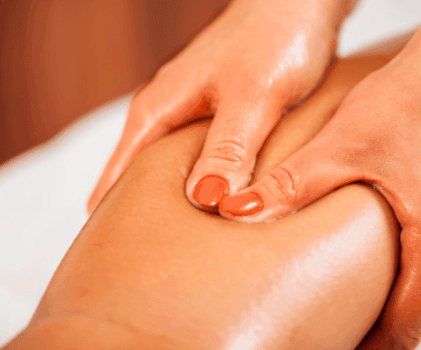
Let's start with what MLD is NOT...Manual Lymphatic Drainage is often referred to as Manual Lymphatic Massage. This is NOT the case. It is not a massage. MLD does not manipulate the muscles for pain relief. MLD is a very light skin-stretching technique that helps movement of the lymphatic fluid from swollen areas of the body towards areas that are draining well. This is called decongesting. There are four basic movements that are used.
Stationary Circle, the Pump Stroke, the rotary Stroke and the Scoop Stroke.
MLD is a gentle, skin-stretching massage technique designed to stimulate the natural circulation of lymph fluid throughout the body. Unlike traditional massages that target deep muscles, MLD works directly on the superficial lymphatic system located just beneath the skin to accelerate cellular waste removal and fluid clearing. The lymphatic system has no central pump. It relies entirely on your breathing, muscle movement, and arterial pulses to push fluid along. When this system becomes sluggish due to stress, lack of movement, illness, or genetic conditions, fluid pools in the tissues, leading to systemic congestion, swelling, and low immunity.
Many times, when we wake up and feel stiff, then start moving, we feel lighter after a few minutes. This is the fluid moving and that tightness goes away.
How Manual Lymphatic Drainage Works
The “Vacuum” Effect: A practitioner always opens the “drains” first-starting at the collarbones and neck-before working on congested areas. This clears the central pathways, creating a vacuum effect that pulls stagnant fluid up from the limbs
Directional Skin Stretching: Treatments rely on light, rhythmic, flat-handed movements that gently stretch the skin in the exact anatomical direction of lymph flow. This opens up tiny, one-way microscopic valves in the initial lymph vessels, allowing trapped fluid to enter the system and drain away.
Ultra-Light Pressure: Because the primary lymph pathways sit directly under the skin, the pressure used is exceptionally light (roughly the weight of a nickel). Heavy pressure or deep tissue kneading actually collapses the delicate lymph vessels, blocking fluid flow entirely.
Zero Lubricants: True clinical MLD is performed on clean, dry skin without oils, lotions, or sliding tools, as skin-to-skin friction is required to properly stretch the superficial vessels.
Cost of sessions:
60-Minute $150
75-Minute $175
90-Minute $225
Core functions of the Lymphatic System
Fluid Balance
Waste Removal
Immune Defense
MLD can be helpful for illnesses such as
Lyme Disease
Chronic Fatigue Syndrome
Long-Covid
Some Skin Disorders
Migraines
Fibromyalgia
Rheumatoid Arthritis
Inflammation
Chronic sinusitis & Cranial Congestions
IBS
For most people, it is safe to have MLD treatments, however, here is a list of who should not receive treatment
Strictly Prohibited:
Acute infections & Fevers: Moving fluid during an active infection (like cellulitis, strep throat, or flu) can spread the pathogen throughout the lymphatic network before the immune system can contain it.
Active Blood Clots (DVT): If a client has active Deep Vein thrombosis, the increased fluid flow can dislodge the clot, causing a life-threatening pulmonary embolism.
Untreated Congestive Heart Failure (CHF): Forcing stagnant fluid back into the bloodstream overloads a failing heart, which can cause sudden pulmonary edema.
Acute Renal Failure: Kidneys that are actively failing cannot process the sudden influx of fluid and metabolic waste cleared by MLD.
Relative contraindications (Requires Strict Doctor Approval)
Active Cancer/Undiagnosed Lumps: We do not work over areas of active, untreated malignancies or unexplained hard lymph nodes without explicit oncology clearance.
Carotid sinus Hypersensitivity: Special care and avoidance are required around the anterior neck pathways for individuals prone to sudden blood pressure drops or arrhythmia
Asthma: Rhythmic thoracic drainage can trigger parasympathetic bronchospasms; clients mu be stable and have their inhaler on hand.